aACE software blog -  a complete resource for SMBs looking to improve their business processes. Read our articles on all things CRM, Accounting Software, ERP, Inventory Management & more

Stay up-to-date on product releases, company announcements, press coverage, and all things aACE.

aACE software blog -  a complete resource for SMBs looking to improve their business processes. Read our articles on all things CRM, Accounting Software, ERP, Inventory Management & more

Stay up-to-date on product releases, company announcements, press coverage, and all things aACE.

Read more about Aligning a Cloud Strategy to Your SMB Goals

Aligning a Cloud Strategy to Your SMB Goals

To be fair, the larger the organization, the more complex the task of aligning all the people and initiatives. For a smaller sized company, this sort of planning can be simpler, although it is just as crucial. Writing for TechTarget, writer Esther Shein gathered valuable commentary on the Accenture findings:

Steve Terp, president of Concerto Cloud Services, contributes to the discussion, articulating how cloud hosting should be viewed: a tool for agility, efficiency, and focus on business needs instead of technology. Likewise, Accenture director and tech officer Jack Sepple points out that "cost reduction, business agility, and better data-driven decision-making" are the areas where cloud services can best assist a company.

Amid the many voices celebrating cloud solutions, it can be easy to lose track of these business purposes, as well as the fact that even the most powerful cloud systems are not perfect. While every business will certainly benefit from improvements in agility and efficiency, aligning technology to goals means that the question is not, "Will this somehow help us?" Rather the discussion should revolve around, "What business needs should our company address first?" If cloud-supported cost reductions or improved decision-making is the answer, full steam ahead.

Sepple also points out that the value proposition for cloud-hosted software, whether that is an ERP suite, a CRM package, or an accounting module, has a broad impact. Implementing a cloud strategy might begin with the company officers, but it immediately draws in the IT staff and eventually effects everyone in the company. Oftentimes the success of an implementation will hinge on how closely IT staff, line-of-business personnel, and executives coordinate.

Executives who are confronted by the profit margin each day can have an easy buy-in. Similarly, IT staff will clearly see the technical benefits of hosting software in the cloud. Your technical team might need to ramp up on some aspects of SaaS. The Accenture study found that not all IT team might be instantly ready to deploy a cloud-hosted solution. Brett Gillett from Amazon Web Services pinpoints a few key areas of preparation: understanding software development, how it runs in the infrastructure, network connectivity, performance when different systems are integrating, and security. This learning curve needs to be part of the overall alignment conversation.

The folks who will use the software each day might have the most dramatic impact on their work. To help this segment of your team, the consulting agency SADA Systems recommends taking time to help individuals understand why their work tools are being shifted around. It's possible that from their vantage point, things may not appear to be broken, so there isn't much need to fix them. SADA has formulated a Value Envisioning Workshop for this purpose, which consists of time and attention spent on creating the vision behind the change — a vision that should grow from close alignment with business goals. These goals can be presented in business use cases that your team will relate to, then discussed directly, and delimited with specific success criteria.

Clearly, the desire for a successful move to cloud hosting cannot be made on a whim. And while your organization is probably less intricate than some of the global corporations who responded to the Accenture survey, a small or mid-sized business cannot afford to waste resources in a problematic, ineffectual software deployment. A careful fit of cloud strategy to business goals sets the stage for your success.


Going beyond the articles referenced here, a final detail should be addressed. A cloud-hosted situation is also a long-term relationship with a vendor, even more so if they are developing custom apps for your precise business needs, as is possible with FileMaker Cloud. These people are not exactly on your staff, but they will have a critical role to play, during deployment and for months and years after. Be sure to select a group that has a track record of outstanding support.


Learn More

In 2016, the business consulting group Accenture conducted a survey of almost 1,900 C-suite executives around the world. This “Cloud in the Boardroom” study (available as a LinkedIn slideshare) found that even though 95% of these leaders had a five-year cloud strategy, only 38% had aligned... Learn More

-->

In 2016, the business consulting group Accenture conducted a survey of almost 1,900 C-suite executives around the world. This “Cloud in the Boardroom” study (available as a LinkedIn slideshare) found that even though 95% of these leaders had a five-year cloud strategy, only 38% had aligned their plans with overarching business goals. They were all on board, but only some knew where they were going.

To be fair, the larger the organization, the more complex the task of aligning all the people and initiatives. For a smaller sized company, this sort of planning can be simpler, although it is just as crucial. Writing for TechTarget, writer Esther Shein gathered valuable commentary on the Accenture findings:

Steve Terp, president of Concerto Cloud Services, contributes to the discussion, articulating how cloud hosting should be viewed: a tool for agility, efficiency, and focus on business needs instead of technology. Likewise, Accenture director and tech officer Jack Sepple points out that "cost reduction, business agility, and better data-driven decision-making" are the areas where cloud services can best assist a company.

Amid the many voices celebrating cloud solutions, it can be easy to lose track of these business purposes, as well as the fact that even the most powerful cloud systems are not perfect. While every business will certainly benefit from improvements in agility and efficiency, aligning technology to goals means that the question is not, "Will this somehow help us?" Rather the discussion should revolve around, "What business needs should our company address first?" If cloud-supported cost reductions or improved decision-making is the answer, full steam ahead.

Sepple also points out that the value proposition for cloud-hosted software, whether that is an ERP suite, a CRM package, or an accounting module, has a broad impact. Implementing a cloud strategy might begin with the company officers, but it immediately draws in the IT staff and eventually effects everyone in the company. Oftentimes the success of an implementation will hinge on how closely IT staff, line-of-business personnel, and executives coordinate.

Executives who are confronted by the profit margin each day can have an easy buy-in. Similarly, IT staff will clearly see the technical benefits of hosting software in the cloud. Your technical team might need to ramp up on some aspects of SaaS. The Accenture study found that not all IT team might be instantly ready to deploy a cloud-hosted solution. Brett Gillett from Amazon Web Services pinpoints a few key areas of preparation: understanding software development, how it runs in the infrastructure, network connectivity, performance when different systems are integrating, and security. This learning curve needs to be part of the overall alignment conversation.

The folks who will use the software each day might have the most dramatic impact on their work. To help this segment of your team, the consulting agency SADA Systems recommends taking time to help individuals understand why their work tools are being shifted around. It's possible that from their vantage point, things may not appear to be broken, so there isn't much need to fix them. SADA has formulated a Value Envisioning Workshop for this purpose, which consists of time and attention spent on creating the vision behind the change — a vision that should grow from close alignment with business goals. These goals can be presented in business use cases that your team will relate to, then discussed directly, and delimited with specific success criteria.

Clearly, the desire for a successful move to cloud hosting cannot be made on a whim. And while your organization is probably less intricate than some of the global corporations who responded to the Accenture survey, a small or mid-sized business cannot afford to waste resources in a problematic, ineffectual software deployment. A careful fit of cloud strategy to business goals sets the stage for your success.


Going beyond the articles referenced here, a final detail should be addressed. A cloud-hosted situation is also a long-term relationship with a vendor, even more so if they are developing custom apps for your precise business needs, as is possible with FileMaker Cloud. These people are not exactly on your staff, but they will have a critical role to play, during deployment and for months and years after. Be sure to select a group that has a track record of outstanding support.


Learn More

Read more about Your Customers Are Searching for You on Mobile Devices ― What Are They Finding?

Your Customers Are Searching for You on Mobile Devices ― What Are They Finding?

The experts making these predictions are Forrester Research. Their findings are available in a report titled The Biggest Prize In Mobile Commerce Is Influencing Offline Sales. Some of the key details have been gathered at MediaPost.com, where Laurie Sullivan surveys far-reaching implications of these shoppers using mobile devices.

The article highlights the tasks these customers performed prior to an in-store purchase. Gold, silver, and bronze medals in this category go to comparing prices, looking up product information, and reading customer reviews.

This might seem like a touch of paradox — people using hi-tech tools for such basic shopping tasks? With their HD resolution and top-of-the-line processors, shouldn't they be using those smartphones or tablets for something... more? Actually this may be more of a demonstration of the 80/20 rule, where most of a consumer's decision-making is based on relatively few details. When shoppers shop, the information they're most interested is dollars, details, and trust.

A more important question here might be, "When customers search for your product, are they finding the information that helps them make the right choice?" (We all know what the right choice for your customers is, don't we?) Are you making it easy for them to see your competitive pricing, your product quality, and your existing customers' enthusiasm?

To take these patterns and make something more actionable, Ms. Sullivan goes on to discuss some other statistics of mobile usage. She notes that a strong majority of consumers (83%) are willing to download a focused app for the services they rely on; however, preference for apps over mobile-responsive Web sites lags at not-quite half (47%). More constraining still, less than 25% of shoppers are willing to share basic contact information, a fact which ties into low results about personalized shopping experiences (for example, only 9% of U.S. online adults are willing to let retailers know their location).

This paints a picture of shoppers who want to be in control of their shopping experience. They use various digital channels to gather the information they want, but are reluctant to give personal information in return, unless there is a clear, valuable benefit for doing so.

If this is an accurate portrait of mobile-savvy shoppers, what should you do about it?

The takeaway from this report is nothing new, even though digital technology has changed so many aspects of a customer's life. Your company, not just your sales team, must prove its value to an audience who is able to check and compare and verify. By providing easy access to the relevant details about your products, services, and culture, you start building a rapport. By respecting their boundaries, you develop trust. By following through with all the attentiveness and alacrity that a modern CRM system can enable, you earn their business — you become the solution they were searching for.

aACE Software is invested in helping you meet and exceed the expectations of your customers. Our cross-platform business management software can help you increase your company's velocity. Whether you rely on PC, Mac, or a combination of the two, our FileMaker platform tools can enable you to respond to the dynamic network of suppliers and consumers more efficiently as well as more effectively. One of our customers has described it this way:

"Since moving to aACE [integrated with VerticalResponse], we have been able to keep our mailing lists much more up-to-date. Our email marketing campaign has grown exponentially since introducing this system, and we are seeing excellent results. The best part is that it is super simple for us to use, making it much more likely to be used time and time again." — Doug Jacobs, President, Restylers' Choice

Contact us today to find out how you can get the aACE advantage.

Learn More

Smartphone sales reached $60 billion last year, but the offline sales affected by smartphones — that exceeded $1 trillion. And experts predict both of these numbers are going to increase.The experts making these predictions are Forrester Research. Their findings are available in a report titled... Learn More

-->

Smartphone sales reached $60 billion last year, but the offline sales affected by smartphones — that exceeded $1 trillion. And experts predict both of these numbers are going to increase.

The experts making these predictions are Forrester Research. Their findings are available in a report titled The Biggest Prize In Mobile Commerce Is Influencing Offline Sales. Some of the key details have been gathered at MediaPost.com, where Laurie Sullivan surveys far-reaching implications of these shoppers using mobile devices.

The article highlights the tasks these customers performed prior to an in-store purchase. Gold, silver, and bronze medals in this category go to comparing prices, looking up product information, and reading customer reviews.

This might seem like a touch of paradox — people using hi-tech tools for such basic shopping tasks? With their HD resolution and top-of-the-line processors, shouldn't they be using those smartphones or tablets for something... more? Actually this may be more of a demonstration of the 80/20 rule, where most of a consumer's decision-making is based on relatively few details. When shoppers shop, the information they're most interested is dollars, details, and trust.

A more important question here might be, "When customers search for your product, are they finding the information that helps them make the right choice?" (We all know what the right choice for your customers is, don't we?) Are you making it easy for them to see your competitive pricing, your product quality, and your existing customers' enthusiasm?

To take these patterns and make something more actionable, Ms. Sullivan goes on to discuss some other statistics of mobile usage. She notes that a strong majority of consumers (83%) are willing to download a focused app for the services they rely on; however, preference for apps over mobile-responsive Web sites lags at not-quite half (47%). More constraining still, less than 25% of shoppers are willing to share basic contact information, a fact which ties into low results about personalized shopping experiences (for example, only 9% of U.S. online adults are willing to let retailers know their location).

This paints a picture of shoppers who want to be in control of their shopping experience. They use various digital channels to gather the information they want, but are reluctant to give personal information in return, unless there is a clear, valuable benefit for doing so.

If this is an accurate portrait of mobile-savvy shoppers, what should you do about it?

The takeaway from this report is nothing new, even though digital technology has changed so many aspects of a customer's life. Your company, not just your sales team, must prove its value to an audience who is able to check and compare and verify. By providing easy access to the relevant details about your products, services, and culture, you start building a rapport. By respecting their boundaries, you develop trust. By following through with all the attentiveness and alacrity that a modern CRM system can enable, you earn their business — you become the solution they were searching for.

aACE Software is invested in helping you meet and exceed the expectations of your customers. Our cross-platform business management software can help you increase your company's velocity. Whether you rely on PC, Mac, or a combination of the two, our FileMaker platform tools can enable you to respond to the dynamic network of suppliers and consumers more efficiently as well as more effectively. One of our customers has described it this way:

"Since moving to aACE [integrated with VerticalResponse], we have been able to keep our mailing lists much more up-to-date. Our email marketing campaign has grown exponentially since introducing this system, and we are seeing excellent results. The best part is that it is super simple for us to use, making it much more likely to be used time and time again." — Doug Jacobs, President, Restylers' Choice

Contact us today to find out how you can get the aACE advantage.

Learn More

Read more about Amazon Outage Highlights the Pitfalls of Cloud Hosting

Amazon Outage Highlights the Pitfalls of Cloud Hosting

Amazon immediately worked on identifying and correcting the problem, but even outstanding recovery efforts still draw attention to the fact that there was a serious error.

One analyst looked past the single human error that directly caused the outage ― a typo in some pivotal AWS testing efforts ― to the other human errors that made the outage so dramatic. Oleg Dulin, writing for ComputerWorld, explains that many AWS customers didn't pay close enough attention to the difference between cloud "durability" and cloud "accessibility." Durability is your cloud provider's assurance that your data will not be lost, and most services have a phenomenal track record here. Accessibility, on the other hand, measures whether or not you can get to that cloud-hosted data; ratings here are significantly lower. Even with AWS's promise of 99.99% accessibility per year, there will be almost an hour where users will not be able to access their data.

It's also worth noting last month's outage was not a unique occurrence. While only Amazon knows the full details about AWS outages, DownDetector.com collects and publishes anecdotal evidence of problems with access. Since October 2015, they have identified 31 AWS outages of various significance.

To minimize the impact of unexpected cloud-hosting downtime, Amazon and other hosts use cross-region backups, cross-region replication, and smarter replication. However, as one analyst put it, "This incident will make enterprises think twice about moving certain workloads and apps to the public cloud and motivate them to look closely at the private cloud." In discussing more about the solutions to cloud outages, another writer explained that Big Cloud services have denied one of the primary features of the Web, exchanging resilient, de-centralized networks for convenient, although brittle, centralized systems. He recommends that your IT team look into distributing resources across multiple regions and also explore options for private cloud and hybrid cloud models.

Taking up the topic of hybrid models, Hostway, a smaller cloud-services provider, has argued that in hosted services arena, bigger isn't necessarily better. By leveraging the largest networks, Hostway says they are able to provide a better experience than any one of the largest clouds can offer. They offer a free white paper that elaborates on the details.

Accessibility requirements for accounting, CRM, and ERP software vary greatly from company to company. For some, downtime is just a slight inconvenience. For others, disrupted access for a single hour during the business day could cost tens of thousands of dollars. That's why aACE software can be installed on premises or hosted using FileMaker Cloud (which leverages Amazon) or set up with a customized architecture that is designed by your IT team.

Contact us today to talk about your company's business software needs.

Learn More

Last month Amazon Web Services (AWS) experienced an outage. When their cloud-computing network went down, it brought with it a number of major Internet sites ― Quora, Business Insider, Netflix, Reddit and Slack ― and many more smaller sites. Observers reported that the event also impacted... Learn More

-->

Last month Amazon Web Services (AWS) experienced an outage. When their cloud-computing network went down, it brought with it a number of major Internet sites ― Quora, Business Insider, Netflix, Reddit and Slack ― and many more smaller sites. Observers reported that the event also impacted Mashable, a global, multi-platform media and entertainment company, prompting that company to resort to a tweet: "We can't publish our story about AWS being down because, well, AWS is down."

Amazon immediately worked on identifying and correcting the problem, but even outstanding recovery efforts still draw attention to the fact that there was a serious error.

One analyst looked past the single human error that directly caused the outage ― a typo in some pivotal AWS testing efforts ― to the other human errors that made the outage so dramatic. Oleg Dulin, writing for ComputerWorld, explains that many AWS customers didn't pay close enough attention to the difference between cloud "durability" and cloud "accessibility." Durability is your cloud provider's assurance that your data will not be lost, and most services have a phenomenal track record here. Accessibility, on the other hand, measures whether or not you can get to that cloud-hosted data; ratings here are significantly lower. Even with AWS's promise of 99.99% accessibility per year, there will be almost an hour where users will not be able to access their data.

It's also worth noting last month's outage was not a unique occurrence. While only Amazon knows the full details about AWS outages, DownDetector.com collects and publishes anecdotal evidence of problems with access. Since October 2015, they have identified 31 AWS outages of various significance.

To minimize the impact of unexpected cloud-hosting downtime, Amazon and other hosts use cross-region backups, cross-region replication, and smarter replication. However, as one analyst put it, "This incident will make enterprises think twice about moving certain workloads and apps to the public cloud and motivate them to look closely at the private cloud." In discussing more about the solutions to cloud outages, another writer explained that Big Cloud services have denied one of the primary features of the Web, exchanging resilient, de-centralized networks for convenient, although brittle, centralized systems. He recommends that your IT team look into distributing resources across multiple regions and also explore options for private cloud and hybrid cloud models.

Taking up the topic of hybrid models, Hostway, a smaller cloud-services provider, has argued that in hosted services arena, bigger isn't necessarily better. By leveraging the largest networks, Hostway says they are able to provide a better experience than any one of the largest clouds can offer. They offer a free white paper that elaborates on the details.

Accessibility requirements for accounting, CRM, and ERP software vary greatly from company to company. For some, downtime is just a slight inconvenience. For others, disrupted access for a single hour during the business day could cost tens of thousands of dollars. That's why aACE software can be installed on premises or hosted using FileMaker Cloud (which leverages Amazon) or set up with a customized architecture that is designed by your IT team.

Contact us today to talk about your company's business software needs.

Learn More

Read more about Finding the Best CRM Match for Your SMB: A Checklist

Finding the Best CRM Match for Your SMB: A Checklist

This is a vital decision that can either generate great benefits for your SMB or else drain time, attention, energy, and funds. The plain fact is that with the question of CRM software, you can't afford to make a mistake you'll regret for months or years.

Knowing how important this choice will be, Small Business Trends has posted about key factors you should account for in your decision-making process. Find the customer relationship management tools that best match your company by reviewing this checklist:

CheckBox.gifProblem Solving - Finding the right match for your company does not begin with Google. The first step is to examine your own company. Specifically, have a candid discussion with your team about the trouble-spots in your customer success approach. You might find that the immediate challenges aren't something that CRM software can resolve, but this conversation will help you create a checklist of priority issues that can prepare the way for future growth.

CheckBox.gifName Brands - After you know your company's specific needs, it becomes easier to see past advertising pressures from the biggest CRM providers. There will be many strong features in each software package you review, but you should not base your decision and your future customer relationship approach on what other companies are searching for. Top ranking in a search results often has more to do with advertising budgets than with how well-matched a company is to your needs. Similarly, using deals, incentives, and discounts as the prime factor for your choice may be less effective in the long run.

CheckBox.gifSolutions - Keep attention fixed on the business operations pain-points that need to be improved. This is the bullseye for CRM providers who want your business. It may be worthwhile to frame these needed solutions as frank questions you can present to each software vendor. In your conversations with sales reps, press for details and demonstrations of how their CRM suite handles your most-valued functionality.

CheckBox.gifFeatures - Another way to keep sales conversations focused on your needs instead of their promotions is to list out your priorities for functionality. If you need a cross-platform solution that will run smoothly on both the PC desktops in the office and the iPads carried on sales calls, that should be noted up front.

CheckBox.gifCustomized and Prioritized Communications - A big part of the "management" aspect of CRM is communications. Make sure that this item is included in your ideal feature-set. A package that doesn't make it easy for you to customize messages for clients in each stage of the buyer's journey isn't a suite you want to invest in. In the same vein, some of your potential clients will be most comfortable with texts, emails, or phone conversations. A robust CRM package will support you in reaching out to every segment.

CheckBox.gifTime Savings and Automation - A CRM suite that doesn't save you time is roughly equivalent to a car that you can only drive in reverse. Sure, you can still get around in it, but it's not really helping that much. In contrast, a high quality tool will offer multiple methods to leverage the system so your people can focus on the most valuable tasks. An automated reminder to folks on your email list is great, letting sales staff concentrate on people with questions about your company's services and products. This can be a great place to have the CRM reps outline all the possible automation features, because until you hear that it's possible you might not realize it would be useful.

CheckBox.gifConversion Foundation - All other factors being equal, a feature that supports sales better is generally more valuable than other bells and/or whistles. Beyond your company's specific customer success needs, keep attention focused on the digital tools that will facilitate sales rather than vanity metrics.

CheckBox.gifSpeed - Qualifying leads and deciding on the best strategy for reaching out to potential customer might not be something you completely automate. But your CRM tool should make these kinds of decisions snap-simple to review and follow through.

CheckBox.gifAnalytics - This is another area where you might not realize what is possible until the CRM reps walk through the sales pitch. Let them know it's important to you, then let them try to impress you. At the least, a robust system will be able to identify patterns in communications efforts, helping you tune your efforts for particular groups of potential customers.

CheckBox.gifNavigation - A user interface that supports the users might seem a little too obvious, but speed and time savings can be compromised if the system makes it hard to get things done. And this friction can continue to add up, with your team members feeling irritated every time they have to access the program. This isn't to say glossy buttons and slick animations should be the primary consideration in your shopping. But when you're going to be using a tool day in and day out for weeks, months, and years, ease of use becomes significant.

CheckBox.gifCollaboration Features - In the same category with communication and automation features, collaboration functionality can help accelerate your business. Since everyone on your staff has a role in customer success, a CRM system that connects your team will bring more people, more ideas, more solutions to bear on each client's needs. This teamwork is a great way to make sure you capitalize on every opportunity to exceed customer expectations.

CheckBox.gifPartners and Integrations - Leverage your funds to get multiple tools for your investment. Like the digital web it's built on, modern commerce is a network. No wholesale distribution, light manufacturing, or professional services company is an island unto itself, and a high quality CRM package will come with a similar entourage. In that crucial planning stage, make sure your personnel take time to identify the software intergrations that will be most useful for enhancing your business.

CheckBox.gifIntegration with Current Tools - This item might seem like a no-brainer, but it actually deserves careful consideration. Your company's growth might be to the point where an upgrade of your full toolset is needed ― or you might have critical legacy tools that are still embedded in your workflows. In these situations, the CRM suite's ability to play well with other modules becomes very important. Platforms such as FileMaker have a reputation for effective integrations, but you'll want to verify details before you make a full commitment.

CheckBox.gifBusiness Goals and Growth - The future is another high-level factor that should influence your CRM decision. With your smart strategy and careful execution, your company is not going to stay the same size that it is now. When you double your staff or triple your customer interactions, you don't want to put the brakes on so you can get a more robust CRM tool into place. This foresight might cost more up-front, but the investment will clearly pay off when you can smoothly scale up to handle success.

CheckBox.gifCustomer Service - Purchasing business management software is different, of course, from buying office supplies. You will be initiating a long-term relationship with the CRM vendor, one that will carry on through the installation and migration process to troubleshooting and upgrades. Ask some pointed questions to make sure the software provider is going to give you the same kind of attentive service that you extend to your clients. What are the response times and the communication methods that will work best for your team? Ideally the software will run without any disruption whatsoever, but with the recent lessons learned from Amazon Web Services, we know that even companies with global resources can have significant downtime.

CheckBox.gifCommunity Features - While a nexus of other users won't replace reliable customer service, it can be a useful resource. This might not be a site that the software vendor directly provides. For example, FileMaker-based CRM packages ― whether produced by professional programming companies or by citizen developers ― benefit from an active community who share experience and tips and problem-solving.

CheckBox.gifPrice Model and Hidden Costs - Yep, we've reached the bottom line. However the question of "How much is this all going to cost me?" might be less important than figuring out the best pricing model for your situation. When you find a CRM suite that matches your checklist of priorities, you probably don't want to discard it just because of the price tag. Respectable professionals will understand that different customers have different pricing needs ― in fact, if they don't have plans already established for this kind of arrangement, you might want to ask a few more pointed questions about the company. Similarly, a trustworthy organization will be able to give you a full list of all the fees and expenses involved before you sign anything. Make sure there won't be any little surprises tucked away inside the bill.

Bonus Tip:

Although Small Business Trends doesn't touch on this point, we should mention the value of finding a software tool with good references. When existing customers are willing to recommend the product to others, that goes a long way to identifying a vendor you want to work with. Software review sites such as G2 Crowd or Capterra can help you evaluate your short-list by providing quick stats as well as customer reviews:

"Since moving to aACE + VerticalResponse, we have been able to keep our mailing lists much more up-to-date. Our email marketing campaign has grown exponentially since introducing this system, and we are seeing excellent results. The best part is that it is super simple for us to use, making it much more likely to be used time and time again." ― Doug Jacobs, President, Restylers' Choice
Learn More


A checklist can be a great resource when you confront the daily decisions about your small business. This is actually one of the reasons a CRM package is so valuable. When you have a high-level view of customer patterns, plus details about each client's interactions with your company, you can... Learn More

-->

A checklist can be a great resource when you confront the daily decisions about your small business. This is actually one of the reasons a CRM package is so valuable. When you have a high-level view of customer patterns, plus details about each client's interactions with your company, you can evaluate options better and select the best choice.

But how do you select the best choice for a CRM package?

This is a vital decision that can either generate great benefits for your SMB or else drain time, attention, energy, and funds. The plain fact is that with the question of CRM software, you can't afford to make a mistake you'll regret for months or years.

Knowing how important this choice will be, Small Business Trends has posted about key factors you should account for in your decision-making process. Find the customer relationship management tools that best match your company by reviewing this checklist:

CheckBox.gifProblem Solving - Finding the right match for your company does not begin with Google. The first step is to examine your own company. Specifically, have a candid discussion with your team about the trouble-spots in your customer success approach. You might find that the immediate challenges aren't something that CRM software can resolve, but this conversation will help you create a checklist of priority issues that can prepare the way for future growth.

CheckBox.gifName Brands - After you know your company's specific needs, it becomes easier to see past advertising pressures from the biggest CRM providers. There will be many strong features in each software package you review, but you should not base your decision and your future customer relationship approach on what other companies are searching for. Top ranking in a search results often has more to do with advertising budgets than with how well-matched a company is to your needs. Similarly, using deals, incentives, and discounts as the prime factor for your choice may be less effective in the long run.

CheckBox.gifSolutions - Keep attention fixed on the business operations pain-points that need to be improved. This is the bullseye for CRM providers who want your business. It may be worthwhile to frame these needed solutions as frank questions you can present to each software vendor. In your conversations with sales reps, press for details and demonstrations of how their CRM suite handles your most-valued functionality.

CheckBox.gifFeatures - Another way to keep sales conversations focused on your needs instead of their promotions is to list out your priorities for functionality. If you need a cross-platform solution that will run smoothly on both the PC desktops in the office and the iPads carried on sales calls, that should be noted up front.

CheckBox.gifCustomized and Prioritized Communications - A big part of the "management" aspect of CRM is communications. Make sure that this item is included in your ideal feature-set. A package that doesn't make it easy for you to customize messages for clients in each stage of the buyer's journey isn't a suite you want to invest in. In the same vein, some of your potential clients will be most comfortable with texts, emails, or phone conversations. A robust CRM package will support you in reaching out to every segment.

CheckBox.gifTime Savings and Automation - A CRM suite that doesn't save you time is roughly equivalent to a car that you can only drive in reverse. Sure, you can still get around in it, but it's not really helping that much. In contrast, a high quality tool will offer multiple methods to leverage the system so your people can focus on the most valuable tasks. An automated reminder to folks on your email list is great, letting sales staff concentrate on people with questions about your company's services and products. This can be a great place to have the CRM reps outline all the possible automation features, because until you hear that it's possible you might not realize it would be useful.

CheckBox.gifConversion Foundation - All other factors being equal, a feature that supports sales better is generally more valuable than other bells and/or whistles. Beyond your company's specific customer success needs, keep attention focused on the digital tools that will facilitate sales rather than vanity metrics.

CheckBox.gifSpeed - Qualifying leads and deciding on the best strategy for reaching out to potential customer might not be something you completely automate. But your CRM tool should make these kinds of decisions snap-simple to review and follow through.

CheckBox.gifAnalytics - This is another area where you might not realize what is possible until the CRM reps walk through the sales pitch. Let them know it's important to you, then let them try to impress you. At the least, a robust system will be able to identify patterns in communications efforts, helping you tune your efforts for particular groups of potential customers.

CheckBox.gifNavigation - A user interface that supports the users might seem a little too obvious, but speed and time savings can be compromised if the system makes it hard to get things done. And this friction can continue to add up, with your team members feeling irritated every time they have to access the program. This isn't to say glossy buttons and slick animations should be the primary consideration in your shopping. But when you're going to be using a tool day in and day out for weeks, months, and years, ease of use becomes significant.

CheckBox.gifCollaboration Features - In the same category with communication and automation features, collaboration functionality can help accelerate your business. Since everyone on your staff has a role in customer success, a CRM system that connects your team will bring more people, more ideas, more solutions to bear on each client's needs. This teamwork is a great way to make sure you capitalize on every opportunity to exceed customer expectations.

CheckBox.gifPartners and Integrations - Leverage your funds to get multiple tools for your investment. Like the digital web it's built on, modern commerce is a network. No wholesale distribution, light manufacturing, or professional services company is an island unto itself, and a high quality CRM package will come with a similar entourage. In that crucial planning stage, make sure your personnel take time to identify the software intergrations that will be most useful for enhancing your business.

CheckBox.gifIntegration with Current Tools - This item might seem like a no-brainer, but it actually deserves careful consideration. Your company's growth might be to the point where an upgrade of your full toolset is needed ― or you might have critical legacy tools that are still embedded in your workflows. In these situations, the CRM suite's ability to play well with other modules becomes very important. Platforms such as FileMaker have a reputation for effective integrations, but you'll want to verify details before you make a full commitment.

CheckBox.gifBusiness Goals and Growth - The future is another high-level factor that should influence your CRM decision. With your smart strategy and careful execution, your company is not going to stay the same size that it is now. When you double your staff or triple your customer interactions, you don't want to put the brakes on so you can get a more robust CRM tool into place. This foresight might cost more up-front, but the investment will clearly pay off when you can smoothly scale up to handle success.

CheckBox.gifCustomer Service - Purchasing business management software is different, of course, from buying office supplies. You will be initiating a long-term relationship with the CRM vendor, one that will carry on through the installation and migration process to troubleshooting and upgrades. Ask some pointed questions to make sure the software provider is going to give you the same kind of attentive service that you extend to your clients. What are the response times and the communication methods that will work best for your team? Ideally the software will run without any disruption whatsoever, but with the recent lessons learned from Amazon Web Services, we know that even companies with global resources can have significant downtime.

CheckBox.gifCommunity Features - While a nexus of other users won't replace reliable customer service, it can be a useful resource. This might not be a site that the software vendor directly provides. For example, FileMaker-based CRM packages ― whether produced by professional programming companies or by citizen developers ― benefit from an active community who share experience and tips and problem-solving.

CheckBox.gifPrice Model and Hidden Costs - Yep, we've reached the bottom line. However the question of "How much is this all going to cost me?" might be less important than figuring out the best pricing model for your situation. When you find a CRM suite that matches your checklist of priorities, you probably don't want to discard it just because of the price tag. Respectable professionals will understand that different customers have different pricing needs ― in fact, if they don't have plans already established for this kind of arrangement, you might want to ask a few more pointed questions about the company. Similarly, a trustworthy organization will be able to give you a full list of all the fees and expenses involved before you sign anything. Make sure there won't be any little surprises tucked away inside the bill.

Bonus Tip:

Although Small Business Trends doesn't touch on this point, we should mention the value of finding a software tool with good references. When existing customers are willing to recommend the product to others, that goes a long way to identifying a vendor you want to work with. Software review sites such as G2 Crowd or Capterra can help you evaluate your short-list by providing quick stats as well as customer reviews:

"Since moving to aACE + VerticalResponse, we have been able to keep our mailing lists much more up-to-date. Our email marketing campaign has grown exponentially since introducing this system, and we are seeing excellent results. The best part is that it is super simple for us to use, making it much more likely to be used time and time again." ― Doug Jacobs, President, Restylers' Choice
Learn More

Read more about ERP ― The Winning Key for Business Operations Efficiency

ERP ― The Winning Key for Business Operations Efficiency

Now let's talk about ERP.

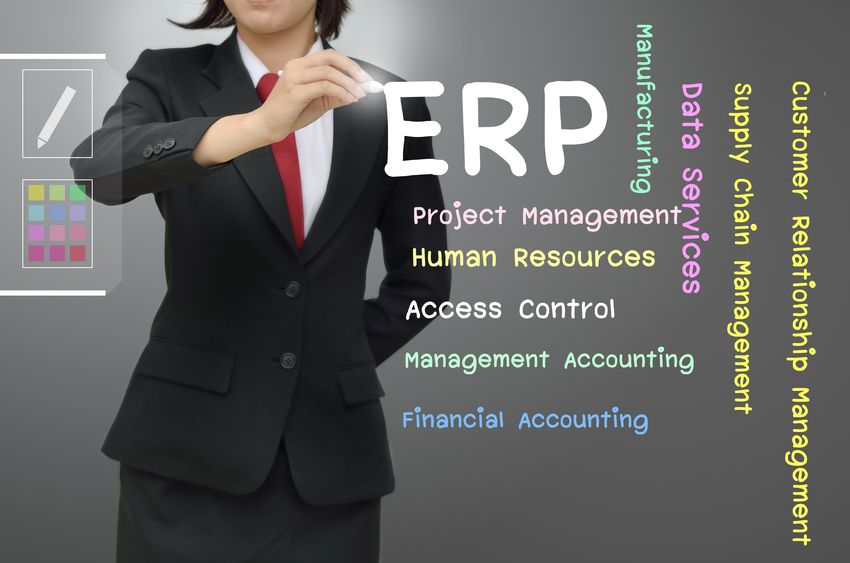
Enterprise resource planning software is the play diagram, whiteboard, film study, and running laps all rolled into one. As discussed on Business-Software.com, ERP is vital for efficiency. And efficiency in your operations will help you accelerate past competitors.

Here are four prime benefits that any small or medium-sized business can gain from a quality ERP system:

Freeing Up Your Staff

Leverage your computer systems to track the details they do best. A machine can track transactions from quote to cash and manage inventory counts like a pro. This liberates time for your people to focus on more complex, more valuable efforts. This amounts to getting the benefit of a new hire without the hassle and expense of hiring. Or drafting another player, to go back to our analogy. So why run laps if you can run plays?

Unified Coordination

A solid game plan makes such a big difference because business is a team sport. Maybe a tennis player and golfer can just give it the old college try and succeed. Or maybe you've got a star player wearing #23, but as your company grows, the impact an individual has on the business shrinks. It becomes more and more valuable for groups to work as a cohesive unit. This kind of coordination is always a challenge, so you don't want to complicate things more by not letting the team know where things stand. More on this in a second.

Data Accuracy

It's becoming a cliche that big data is a game-changer. But no matter how much information you have at your fingertips, if it isn't accurate, it won't help much. A quality ERP system will integrate all your data, making sure that the folks in accounting have a picture that is consistent with what the sales department and the warehouse staff see. Your customers can have a clear understanding as well, which is something they are growing to expect in the e-commerce context.

Company Insight and Agility

The thing about 'big data' is that size is relative. Even a local manufacturing company can benefit from seeing the big picture of the company. You don't need terabytes of data before you can start finding patterns in your operations. A quality ERP system will help you monitor progress towards your company goals and spot emerging trends. These future-facing abilities are exactly what you need to take your game up to the next division. And the best software packages will grow with your company, maximizing the ROI.

As an entrepreneur, you need to think like a coach, addressing multiple levels of operations―from individual players' performance to coordinating plays between departments to monitoring progress through the entire season. Make sure you've got the tools you need to help your team succeed.

A Quality ERP System

"aACE has helped us streamline many of our processes. We have a snapshot of each project with many of the important details being on one screen. We instantly see our profitability within our projects and have specific numbers or data regarding many aspects of our business."
-Lili Hall, President, KNOCK

For more information, contact us today.

Learn More

Imagine if your favorite team (might be the Jayhawks, might not) decided to play without a plan. Just everyone jump in there and do whatever seems best. They might make a fairly good showing in a pick-up game down at the park. After all, they've spent a lot of time developing their expertise.... Learn More

-->

Imagine if your favorite team (might be the Jayhawks, might not) decided to play without a plan. Just everyone jump in there and do whatever seems best. They might make a fairly good showing in a pick-up game down at the park. After all, they've spent a lot of time developing their expertise. The real question: how would they fare against another team just as skilled, but operating on a unified approach to the game? Say goodbye to that trophy.

Now let's talk about ERP.

Enterprise resource planning software is the play diagram, whiteboard, film study, and running laps all rolled into one. As discussed on Business-Software.com, ERP is vital for efficiency. And efficiency in your operations will help you accelerate past competitors.

Here are four prime benefits that any small or medium-sized business can gain from a quality ERP system:

Freeing Up Your Staff

Leverage your computer systems to track the details they do best. A machine can track transactions from quote to cash and manage inventory counts like a pro. This liberates time for your people to focus on more complex, more valuable efforts. This amounts to getting the benefit of a new hire without the hassle and expense of hiring. Or drafting another player, to go back to our analogy. So why run laps if you can run plays?

Unified Coordination

A solid game plan makes such a big difference because business is a team sport. Maybe a tennis player and golfer can just give it the old college try and succeed. Or maybe you've got a star player wearing #23, but as your company grows, the impact an individual has on the business shrinks. It becomes more and more valuable for groups to work as a cohesive unit. This kind of coordination is always a challenge, so you don't want to complicate things more by not letting the team know where things stand. More on this in a second.

Data Accuracy

It's becoming a cliche that big data is a game-changer. But no matter how much information you have at your fingertips, if it isn't accurate, it won't help much. A quality ERP system will integrate all your data, making sure that the folks in accounting have a picture that is consistent with what the sales department and the warehouse staff see. Your customers can have a clear understanding as well, which is something they are growing to expect in the e-commerce context.

Company Insight and Agility

The thing about 'big data' is that size is relative. Even a local manufacturing company can benefit from seeing the big picture of the company. You don't need terabytes of data before you can start finding patterns in your operations. A quality ERP system will help you monitor progress towards your company goals and spot emerging trends. These future-facing abilities are exactly what you need to take your game up to the next division. And the best software packages will grow with your company, maximizing the ROI.

As an entrepreneur, you need to think like a coach, addressing multiple levels of operations―from individual players' performance to coordinating plays between departments to monitoring progress through the entire season. Make sure you've got the tools you need to help your team succeed.

A Quality ERP System

"aACE has helped us streamline many of our processes. We have a snapshot of each project with many of the important details being on one screen. We instantly see our profitability within our projects and have specific numbers or data regarding many aspects of our business."
-Lili Hall, President, KNOCK

For more information, contact us today.

Learn More

Read more about Leverage SBA.org and Other Resources to Make Taxes a Snap

Leverage SBA.org and Other Resources to Make Taxes a Snap

SBAlogo.pngTo help you with extra tax support for small businesses, the U.S. Small Business Administration has prepared a listing of 8 important areas you should check on. Their article includes several useful links for more detailed explanations and steps on how to complete tax-related tasks. Read on to find out which topics are most relevant to your new company.

  1. Business Structure
  2. Federal Tax ID
  3. Estimated Taxes
  4. Tax Reporting Season
  5. Freelancers and Contractors
  6. Employment Tax
  7. Property Tax
  8. Sales Taxes

1. Business structure

Your tax obligations will differ based on how your company is organized. For example, while sole proprietorship, general partnership, LLC, and S Corp structures can report business results on a personal tax return, C Corps are not allowed to do this. And the differences multiply when you explore the state-level tax requirements.

2. Federal Tax ID

As with the tax obligations, different business structures also have differing requirements for federal identification. An EIN (Employer Identification Number) is mandatory if your company is a corporation or partnership. Likewise, if you have employees in your shop, you'll need an EIN to assist with employment taxes (see below). On the other hand, sole proprietorships are typically able to operate using an SSN.

3. Estimated Taxes

The transition from employee to entrepreneur can be tricky here. While your employers were responsible for sending regular payments to the state and federal government, as a new boss you have a new responsibility to send in those checks. This means you must keep funds available to cover these payments each quarter. Calculating and delivering each estimated payment will also require some planning. However your business structure will again affect the details of this obligation. Certain structures must be responsible for more than $1000 income tax for the year before the pay-as-you-go model applies.

4. Tax Reporting Timeframes

Your calendar may never be more important than when it's posting a reminder about the quarterly estimated taxes. In the same way, planning ahead for income tax season can help you minimize your stress, as well as your employees' stress when they're waiting for W2 or 1099 forms. Take advantage of calendar events to help you meet all the deadlines.

5. Freelancers and Contractors

Business trends are showing a rise in contractors and freelance workers. These flexible situations can benefit both you and the freelancer. But they bring unique tax requirements as well. Be sure you know exactly what kind of contract you want to offer and what tax obligations it will entail.

6. Employment Tax

Your team plays a huge part in your business success, whether you are running a retail shop or a manufacturing warehouse. Each employee also brings a responsibility for you to withhold Social Security, Medicare, and income taxes. For this vital aspect of business, the IRS has created a free guide to help clarify reporting, deposits, and deadlines.

7. Property Tax

Not every small or mid-sized business will need a dedicated office space, but as your company grows this will become more important. So even if you don't need information about state taxes on real estate now, you probably will later on. More immediate, there may be local taxes―assessed at the county or city level―for other property owned by your company. This might include assets like vehicles, computers, and software. Check with your local tax authority to learn about the registration and payment requirements.

8. Sales Taxes

This is one of the most complicated tax obligations. While a few states don't assess this tax, most require a quarterly or even monthly payment from each business with a physical presence in the state. In addition, the use of drop-shipping services might make you liable for sales taxes in states on the other side of the country. When it gets into this level of complexity, working with a reliable partner like Avalara can be an excellent investments. Their expertise can help you conserve your resources for the tasks that will help your company grow.


As an entrepreneur looking to leverage each benefit for to additional effect, you can integrate tax support into your business operations software with aACE, maximizing your business velocity. Take advantage of tools to handle the chores of running a new company, saving your time and attention for the exciting parts.

Learn More

With the independence and excitement of starting your own business, there also comes the pressure of completing your own taxes. But one thing worse than taking care of your tax obligations is NOT taking care of them. To help you with extra tax support for small businesses, the U.S. Small Business... Learn More

-->

With the independence and excitement of starting your own business, there also comes the pressure of completing your own taxes. But one thing worse than taking care of your tax obligations is NOT taking care of them.

SBAlogo.pngTo help you with extra tax support for small businesses, the U.S. Small Business Administration has prepared a listing of 8 important areas you should check on. Their article includes several useful links for more detailed explanations and steps on how to complete tax-related tasks. Read on to find out which topics are most relevant to your new company.

  1. Business Structure
  2. Federal Tax ID
  3. Estimated Taxes
  4. Tax Reporting Season
  5. Freelancers and Contractors
  6. Employment Tax
  7. Property Tax
  8. Sales Taxes

1. Business structure

Your tax obligations will differ based on how your company is organized. For example, while sole proprietorship, general partnership, LLC, and S Corp structures can report business results on a personal tax return, C Corps are not allowed to do this. And the differences multiply when you explore the state-level tax requirements.

2. Federal Tax ID

As with the tax obligations, different business structures also have differing requirements for federal identification. An EIN (Employer Identification Number) is mandatory if your company is a corporation or partnership. Likewise, if you have employees in your shop, you'll need an EIN to assist with employment taxes (see below). On the other hand, sole proprietorships are typically able to operate using an SSN.

3. Estimated Taxes

The transition from employee to entrepreneur can be tricky here. While your employers were responsible for sending regular payments to the state and federal government, as a new boss you have a new responsibility to send in those checks. This means you must keep funds available to cover these payments each quarter. Calculating and delivering each estimated payment will also require some planning. However your business structure will again affect the details of this obligation. Certain structures must be responsible for more than $1000 income tax for the year before the pay-as-you-go model applies.

4. Tax Reporting Timeframes

Your calendar may never be more important than when it's posting a reminder about the quarterly estimated taxes. In the same way, planning ahead for income tax season can help you minimize your stress, as well as your employees' stress when they're waiting for W2 or 1099 forms. Take advantage of calendar events to help you meet all the deadlines.

5. Freelancers and Contractors

Business trends are showing a rise in contractors and freelance workers. These flexible situations can benefit both you and the freelancer. But they bring unique tax requirements as well. Be sure you know exactly what kind of contract you want to offer and what tax obligations it will entail.

6. Employment Tax

Your team plays a huge part in your business success, whether you are running a retail shop or a manufacturing warehouse. Each employee also brings a responsibility for you to withhold Social Security, Medicare, and income taxes. For this vital aspect of business, the IRS has created a free guide to help clarify reporting, deposits, and deadlines.

7. Property Tax

Not every small or mid-sized business will need a dedicated office space, but as your company grows this will become more important. So even if you don't need information about state taxes on real estate now, you probably will later on. More immediate, there may be local taxes―assessed at the county or city level―for other property owned by your company. This might include assets like vehicles, computers, and software. Check with your local tax authority to learn about the registration and payment requirements.

8. Sales Taxes

This is one of the most complicated tax obligations. While a few states don't assess this tax, most require a quarterly or even monthly payment from each business with a physical presence in the state. In addition, the use of drop-shipping services might make you liable for sales taxes in states on the other side of the country. When it gets into this level of complexity, working with a reliable partner like Avalara can be an excellent investments. Their expertise can help you conserve your resources for the tasks that will help your company grow.


As an entrepreneur looking to leverage each benefit for to additional effect, you can integrate tax support into your business operations software with aACE, maximizing your business velocity. Take advantage of tools to handle the chores of running a new company, saving your time and attention for the exciting parts.

Learn More

Read more about 5 Business Trends to Take Advantage of in 2017

5 Business Trends to Take Advantage of in 2017

Seeking out customer preferences helps companies hone their product offerings and marketing approaches. Jeffrey Hayzlett has gathered insight about 5 major trends you can use to make sure your company is aligning closer with the most important people in your industry: your customers.

Trend 1: Elevated customer engagement - Sales is being transformed by a stronger focus on relationships. Rather than a mere transaction, customers are starting to expect companies to provide personalized services. What are recommendations you can offer? What extra insight can you give for someone interested in your products?

Trend 2: Customer data collection - How do you know what to recommend to your customers? From the data you're gathering. (You are gathering data, right?) A quality CRM package is vital here. After you have the needed information, make it a priority to leverage that data into programs and features that take your customer engagement even farther.

Trend 3: Automation - You might not have the resources or clientele to make artificial intelligence and holographic computing a profitable investment, but you can still leverage your tools. That CRM package you invest in should have options for automatically notifying the right person when things need attention. Likewise, your inventory software should recognize low levels and initiate orders to resupply, so when a customer contacts you, the product is on hand.

Trend 4: Crowdfunding - This trend takes customer engagement into the future. It's asking clients just how interested they are in new product lines and services. Then they answer with their wallet. It may take some innovation on your part, but the insight you get into customer preferences can be priceless. Similar appeals directly to the customer include surveys and even informal face-to-face conversations with your shoppers.

Trend 5: Specialization - As soon as you can, start focusing your attention on the niche customers that are most interested in your products and services. The Internet casts a wide net, so as soon as you establish your website and e-commerce pages, you are reaching broadly, in fact globally. But you need to concentrate on understanding what kinds of people see themselves as the best match for your company. Learn from them and cater to them in order to find more customers like them.

Of course you won't be able to fully implement all these options simultaneously. As an entrepreneur, you've got look at your business model and make the decisions that work right for your growing company. But these recommendations can give you inspiration for what angle you need to make 2017 the year of your success.

Learn More

It may be the Year of the Rooster on the Chinese zodiac, but in business trends a more fitting name might be the Year of the Customer. In several ways, small, mid-sized, and enterprise-level businesses are turning to their clients for guidance. Seeking out customer preferences helps companies hone... Learn More

-->

It may be the Year of the Rooster on the Chinese zodiac, but in business trends a more fitting name might be the Year of the Customer. In several ways, small, mid-sized, and enterprise-level businesses are turning to their clients for guidance.

Seeking out customer preferences helps companies hone their product offerings and marketing approaches. Jeffrey Hayzlett has gathered insight about 5 major trends you can use to make sure your company is aligning closer with the most important people in your industry: your customers.

Trend 1: Elevated customer engagement - Sales is being transformed by a stronger focus on relationships. Rather than a mere transaction, customers are starting to expect companies to provide personalized services. What are recommendations you can offer? What extra insight can you give for someone interested in your products?

Trend 2: Customer data collection - How do you know what to recommend to your customers? From the data you're gathering. (You are gathering data, right?) A quality CRM package is vital here. After you have the needed information, make it a priority to leverage that data into programs and features that take your customer engagement even farther.

Trend 3: Automation - You might not have the resources or clientele to make artificial intelligence and holographic computing a profitable investment, but you can still leverage your tools. That CRM package you invest in should have options for automatically notifying the right person when things need attention. Likewise, your inventory software should recognize low levels and initiate orders to resupply, so when a customer contacts you, the product is on hand.

Trend 4: Crowdfunding - This trend takes customer engagement into the future. It's asking clients just how interested they are in new product lines and services. Then they answer with their wallet. It may take some innovation on your part, but the insight you get into customer preferences can be priceless. Similar appeals directly to the customer include surveys and even informal face-to-face conversations with your shoppers.

Trend 5: Specialization - As soon as you can, start focusing your attention on the niche customers that are most interested in your products and services. The Internet casts a wide net, so as soon as you establish your website and e-commerce pages, you are reaching broadly, in fact globally. But you need to concentrate on understanding what kinds of people see themselves as the best match for your company. Learn from them and cater to them in order to find more customers like them.

Of course you won't be able to fully implement all these options simultaneously. As an entrepreneur, you've got look at your business model and make the decisions that work right for your growing company. But these recommendations can give you inspiration for what angle you need to make 2017 the year of your success.

Learn More

Read more about Earning Trust in the eCommerce Arena: 5 (not so) Easy Steps

Earning Trust in the eCommerce Arena: 5 (not so) Easy Steps

From Business.com, Kristen Gramigna explains 5 tips to make sure your ecommerce site entices customer engagement throughout the buying process:

1. Transparency - Nobody likes hidden fees. And nothing is more jarring to an online consumer than coming to the final screen and discovering that their purchase is going to cost more than they first thought — or rather, more than you first told them. It might seem that minimizing the initial price will make people more interested, and that's not wrong. But if you aren't up-front about all the costs involved with the transaction, it can make people suspicious or resentful instead. To get the best of both worlds, seek out ecommerce tools that will let you display the basic price, but also inform shoppers quickly about any additional charges.

2. Optimization - Nobody likes to sit around waiting, and that's especially true online. This poses a dilemma: Consumers want to see pictures of what they're buying, preferably in HD, from multiple angles, with close-ups; however, they don't want to cool their heels while those images display. Some research says you have a 2-second window before your potential customer decides that it's not worth the wait and they go somewhere else. It may take some ingenuity, but make sure that something starts showing up on your pages before one-Mississippi, two-Mississippi. For example, an ultra-light version of a product picture could display first, then be covered by a higher definition graphic. And if you're serious about the ecommerce thing, make sure that your online store responds well for mobile users too. More and more shoppers will be checking you out on their phone or tablet.

3. Hospitality - Everybody likes to be a respected guest. Shopping online, it turns out, is no exception. While it would be great to get contact information from every shopper, a significant number of people might not feel that your product is worth giving you money AND giving you their personal information. This is another judgment call of course. For a business that focuses on light manufacturing or other B2B sales, the contact info might be essential. But where it's possible, make sure the people visiting your site know that you respect their privacy so much that you won't ask them for info that isn't necessary. For details on the value of guest services, Gramigna draws on the exceptional research and advice of the Nielsen Norman Group.

4. Security - Everybody likes reassurance about security. You know about the encryption, certification, and expertise that makes your site secure, both for financial info and personally identifiable info. Take the extra step to ensure your customers know about it too. The news media have made us all very aware that hackers and viruses and scammers prowl the Web. A little logo from your security provider can go a long way to making people feel more comfortable about typing in their credit card number.

5. Background - Everybody likes a good origin story. Overall, these efforts to enhance your ecommerce site boil down to establishing trust, and it's much easier to trust someone when you know something about them. Contact information, of course, is important. It shows buyers that you're willing to be accountable if there are problems, to be responsive if there are questions. But even more, you can start to build a relationship with your customers by sharing your goals and values. And this feel-good isn't merely a feel-good; once again the Nielsen Norman Group provides research data to explain value-additive About Us pages.

If you're saying to yourself, "This could take some work," you're right. Going beyond the minimum ecommerce site requires more than the minimal effort. But it's a way to distinguish your small company from others. It's an investment in your growth.

To assist in this effort, aACE has built connections to major ecommerce services, including WooCommerce, Shopify, Magento, and Amazon. With our integrations, online transactions can funnel almost immediately to warehouse, then send an update as quickly as the order is fulfilled. Contact us today to learn more.

Learn More

Any small business can jump on the ecommerce bandwagon. There are abundant tools and services that make it easy to get started. However, just having a storefront online doesn't mean people will line up to give you money. Customers know there are other sellers they can find — any disruption to... Learn More

-->

Any small business can jump on the ecommerce bandwagon. There are abundant tools and services that make it easy to get started. However, just having a storefront online doesn't mean people will line up to give you money. Customers know there are other sellers they can find — any disruption to their purchasing mindset can shut down the sales process.

From Business.com, Kristen Gramigna explains 5 tips to make sure your ecommerce site entices customer engagement throughout the buying process:

1. Transparency - Nobody likes hidden fees. And nothing is more jarring to an online consumer than coming to the final screen and discovering that their purchase is going to cost more than they first thought — or rather, more than you first told them. It might seem that minimizing the initial price will make people more interested, and that's not wrong. But if you aren't up-front about all the costs involved with the transaction, it can make people suspicious or resentful instead. To get the best of both worlds, seek out ecommerce tools that will let you display the basic price, but also inform shoppers quickly about any additional charges.

2. Optimization - Nobody likes to sit around waiting, and that's especially true online. This poses a dilemma: Consumers want to see pictures of what they're buying, preferably in HD, from multiple angles, with close-ups; however, they don't want to cool their heels while those images display. Some research says you have a 2-second window before your potential customer decides that it's not worth the wait and they go somewhere else. It may take some ingenuity, but make sure that something starts showing up on your pages before one-Mississippi, two-Mississippi. For example, an ultra-light version of a product picture could display first, then be covered by a higher definition graphic. And if you're serious about the ecommerce thing, make sure that your online store responds well for mobile users too. More and more shoppers will be checking you out on their phone or tablet.

3. Hospitality - Everybody likes to be a respected guest. Shopping online, it turns out, is no exception. While it would be great to get contact information from every shopper, a significant number of people might not feel that your product is worth giving you money AND giving you their personal information. This is another judgment call of course. For a business that focuses on light manufacturing or other B2B sales, the contact info might be essential. But where it's possible, make sure the people visiting your site know that you respect their privacy so much that you won't ask them for info that isn't necessary. For details on the value of guest services, Gramigna draws on the exceptional research and advice of the Nielsen Norman Group.

4. Security - Everybody likes reassurance about security. You know about the encryption, certification, and expertise that makes your site secure, both for financial info and personally identifiable info. Take the extra step to ensure your customers know about it too. The news media have made us all very aware that hackers and viruses and scammers prowl the Web. A little logo from your security provider can go a long way to making people feel more comfortable about typing in their credit card number.

5. Background - Everybody likes a good origin story. Overall, these efforts to enhance your ecommerce site boil down to establishing trust, and it's much easier to trust someone when you know something about them. Contact information, of course, is important. It shows buyers that you're willing to be accountable if there are problems, to be responsive if there are questions. But even more, you can start to build a relationship with your customers by sharing your goals and values. And this feel-good isn't merely a feel-good; once again the Nielsen Norman Group provides research data to explain value-additive About Us pages.

If you're saying to yourself, "This could take some work," you're right. Going beyond the minimum ecommerce site requires more than the minimal effort. But it's a way to distinguish your small company from others. It's an investment in your growth.

To assist in this effort, aACE has built connections to major ecommerce services, including WooCommerce, Shopify, Magento, and Amazon. With our integrations, online transactions can funnel almost immediately to warehouse, then send an update as quickly as the order is fulfilled. Contact us today to learn more.

Learn More

Read more about Pop Quiz: Who’s In Charge of Customer Success?

Pop Quiz: Who’s In Charge of Customer Success?

This answer is the one recommended by Guy Nirpaz, author of Farm Don't Hunt: The Definitive Guide to Customer Success. In his book and on his blog, Guy elaborates on the vital shift from "customer management" to "customer success."

Pop Quiz II: What's the difference?

While customer management today typically hinges on CRM tools, the customer success paradigm focuses on attitudes of the people in your company. It's true that a high-quality CRM package can present customer data to everyone on your team. But if each team member isn't invested in a customer success mindset, data won't help much.

Another distinction of this new paradigm is the primary concern with what happens after the purchase. Are customers able to use what they bought? Are they getting a good ROI on their investment? These are the kinds of questions a customer success team attends to.

Pop Quiz III: Who needs a customer success team?

Yep--another trick question. The answer: you already have one. Each employee on your payroll will ideally recognize that they are part of the customer success team. They each have an important impact on customer experiences with your company. Guy Nirpaz points out that this attitude requires some adjustment from the default division-of-labor we usually rely on. Rather than a specialized team that is assigned all the customer support efforts, each group should contribute. It's still true that your people in the front office, in the warehouse, and on the plant floor all have unique talents and responsibilities. But if people assume customer success falls only to an official Customer Success Team, things aren't going to work as well.

Pop Quiz IV: Who's customer service are you competing with?

One implication of e-commerce on the World Wide Web is that users compare their experience with your company to every other online shopping experience they have. You might not be in direct competition with Amazon, Walmart, or Macy's, but these companies set a standard for customer experience. So when people do business with you, they're evaluating you based on expectations set by other companies. Your organization's customer success mindset is one way you can stand out from the crowd.

Leadership in your company needs to establish a culture that promotes a customer-centric organization. Having this as your mission, with clear values and accountabilities for this goal, is becoming essential in our digitalized economy.

To help you maximize the effectiveness of your customer success efforts, you also need a CRM solution that provides quote-to-cash visibility, plus automation tools to increase your business velocity: aACE 5.

Learn More

The correct answer from your employees should be, "We are." This answer is the one recommended by Guy Nirpaz, author of Farm Don't Hunt: The Definitive Guide to Customer Success. In his book and on his blog, Guy elaborates on the vital shift from "customer management" to "customer success." Pop... Learn More

-->

The correct answer from your employees should be, "We are."

This answer is the one recommended by Guy Nirpaz, author of Farm Don't Hunt: The Definitive Guide to Customer Success. In his book and on his blog, Guy elaborates on the vital shift from "customer management" to "customer success."

Pop Quiz II: What's the difference?

While customer management today typically hinges on CRM tools, the customer success paradigm focuses on attitudes of the people in your company. It's true that a high-quality CRM package can present customer data to everyone on your team. But if each team member isn't invested in a customer success mindset, data won't help much.

Another distinction of this new paradigm is the primary concern with what happens after the purchase. Are customers able to use what they bought? Are they getting a good ROI on their investment? These are the kinds of questions a customer success team attends to.

Pop Quiz III: Who needs a customer success team?

Yep--another trick question. The answer: you already have one. Each employee on your payroll will ideally recognize that they are part of the customer success team. They each have an important impact on customer experiences with your company. Guy Nirpaz points out that this attitude requires some adjustment from the default division-of-labor we usually rely on. Rather than a specialized team that is assigned all the customer support efforts, each group should contribute. It's still true that your people in the front office, in the warehouse, and on the plant floor all have unique talents and responsibilities. But if people assume customer success falls only to an official Customer Success Team, things aren't going to work as well.

Pop Quiz IV: Who's customer service are you competing with?

One implication of e-commerce on the World Wide Web is that users compare their experience with your company to every other online shopping experience they have. You might not be in direct competition with Amazon, Walmart, or Macy's, but these companies set a standard for customer experience. So when people do business with you, they're evaluating you based on expectations set by other companies. Your organization's customer success mindset is one way you can stand out from the crowd.

Leadership in your company needs to establish a culture that promotes a customer-centric organization. Having this as your mission, with clear values and accountabilities for this goal, is becoming essential in our digitalized economy.

To help you maximize the effectiveness of your customer success efforts, you also need a CRM solution that provides quote-to-cash visibility, plus automation tools to increase your business velocity: aACE 5.

Learn More

Scroll to Top